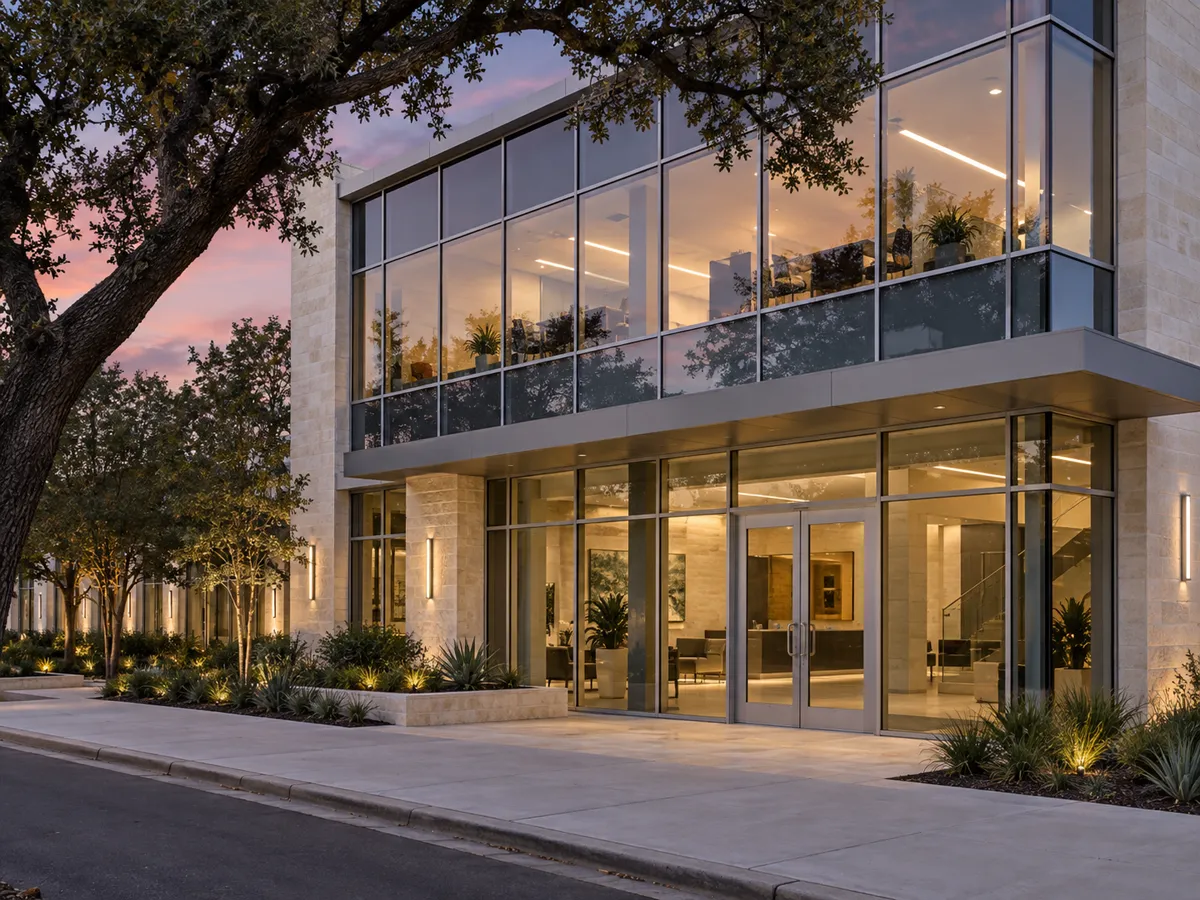
Tilt-up warehouses and distribution buildings
Tall concrete panels coated from lifts, with joints sealed first and work staged around docks and truck traffic.

Rancho Cucamonga Elite Painting provides commercial building exterior painting in Rancho Cucamonga, from tilt-up warehouses and business parks to multi-tenant retail centers and stucco office fronts. Each exterior is coated for hot summers, hard UV and the dry Santa Ana winds that blow through this valley, and phased so tenants keep their doors open.
Get a free painting estimate
A commercial exterior repaint in Rancho Cucamonga is a weather job first and a color job second. Our crews measure each elevation, read what the sun has done to the existing coating, and write a bid that lists the prep and the coating system for every wall, so a property manager or owner can compare it against any other proposal.
This page covers the outside of the building only: tilt-up panels, stucco, metal, storefront frames and the details around them. Suites, lobbies and tenant improvements are handled on our interior page, and a general overview of how we bid sits on our commercial painting page. We work in Rancho Cucamonga, Upland, Ontario, Fontana and the neighboring cities listed below.
Why Rancho Cucamonga Elite Painting
The person who walks your building is the person who answers for the bid.
Rancho Cucamonga is hard on exterior coatings because the sun does most of the damage. Summer afternoons regularly climb past 100 degrees, and a south or west wall can run far hotter than the air beside it. That heat and ultraviolet light break down the binder in a finish over time, which shows up as chalking, a powdery film that rubs off on a hand and leaves the color flat and washed out.
Wind is the second problem. The Santa Ana winds arrive in the fall and winter, pushing dust and grit across open lots and flat roofs and scouring the lower courses of walls. They also dry out a coating and the sealant in a panel joint faster than calm weather does. A wall that looked fine in August can show hairline cracks by the following spring.
Temperature swing adds a third stress. Tilt-up panels, stucco and metal all expand and shrink at different rates between a cool morning and a hot afternoon, and the joints and seams between them take that movement. A repaint that ignores those joints looks good for a season and then opens up along the same lines.
That is why our bids start with a walk instead of a measurement taken from the street. We want to know which elevations take the afternoon sun, where water runs off the roofline onto a wall, and where the old coating has already given up.
Each surface on a commercial building needs different prep and a different product, and the bid treats them as separate lines.
Tilt-up concrete is the most common wall in the city's industrial and business park buildings. Prep starts with washing, then sealing or repairing cracks and panel joints, and treating any efflorescence, the white mineral deposit that moisture leaves behind. A masonry primer follows where the concrete is bare or chalky, then two coats of a high-build exterior finish.
Stucco covers many office fronts, retail pads and medical buildings. Hairline cracks are patched and the wall is primed where it is porous, then recoated with an elastomeric or a quality acrylic exterior system. Elastomeric bridges small cracks, which suits a wall that moves with the heat.
Metal siding, roll-up and personnel doors, canopies, bollards, handrails and rooftop equipment screens are wire-brushed or sanded, spot-primed where rust has started, and finished with a direct-to-metal coating. A rust stain left under paint will bleed back through, so we treat it before anything goes on top.
Aluminum storefront frames, fascia, soffits and wood or foam trim are cleaned, scuffed and coated with a product made for that material. Glass, signage and hardware are masked carefully, because overspray on a window is slow to remove.
Perimeter masonry and trash enclosures take a masonry coating that lets the wall breathe while it sheds dust and dirt.
Products are chosen to meet South Coast AQMD limits on volatile organic compounds, and the data sheet for each is available before work begins.
Most exterior repaints in Rancho Cucamonga happen with tenants inside, so the schedule is part of the work. We build the sequence from a list of what each tenant cannot lose and when.
Early morning, evening and weekend shifts are available when a retail center or a clinic cannot absorb daytime noise. Those hours are stated as their own line in the bid, so the cost of off-hours work is visible and not buried in the total.
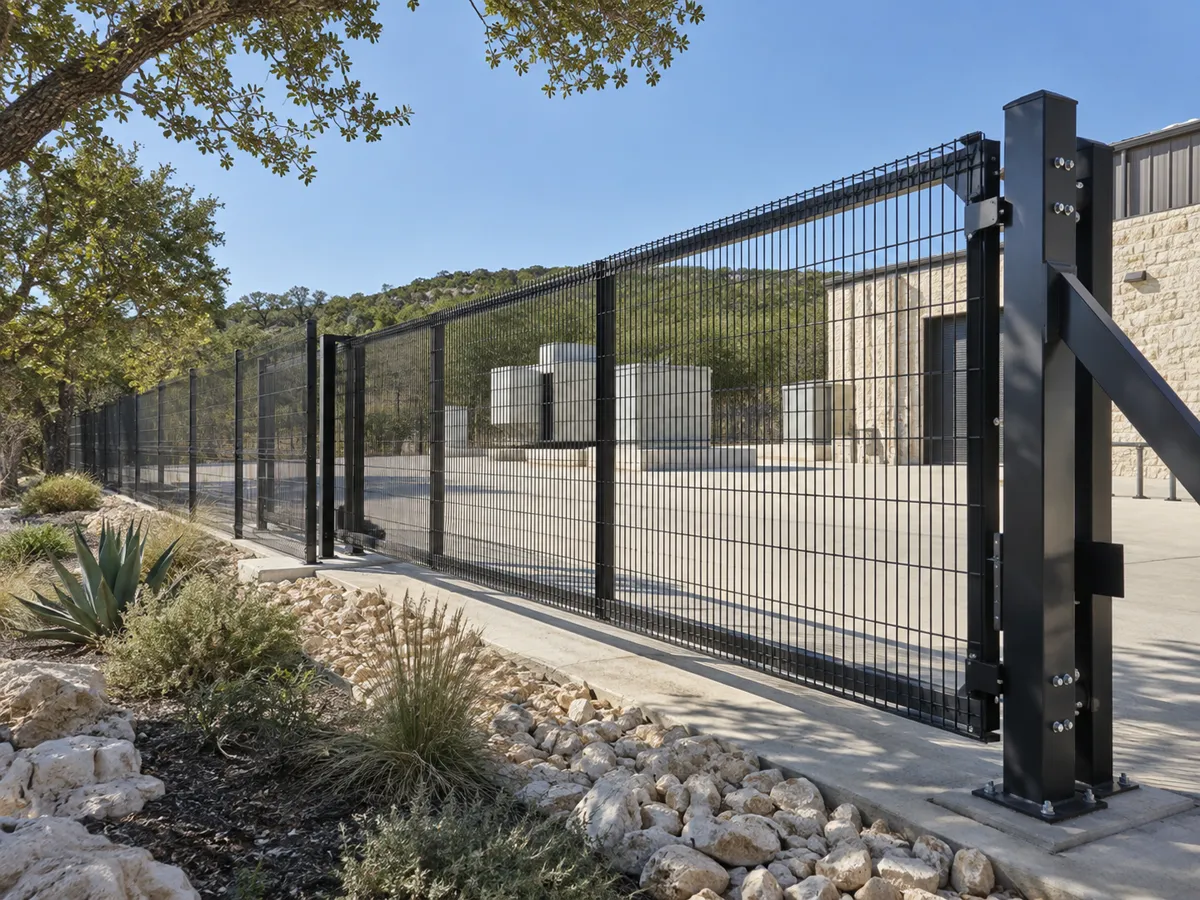
The exterior process is shared, but each kind of property brings its own access, schedule and surface mix.
Tall concrete panels coated from lifts, with joints sealed first and work staged around docks and truck traffic.
Long storefront runs, shared walkways and awnings repainted in sections so every unit keeps its frontage.
Stucco and metal accent walls recoated with lobbies and entries kept open for staff and visitors.
Quiet-hours scheduling, protected patient entries and careful masking near glass and signage.
Mixed concrete, metal siding and roll-up doors, each prepared to its own surface.
Compact exteriors repainted quickly, often over a few off-peak days, with the frontage masked to keep service running.
The city's commercial buildings are grouped along a few corridors, and each group asks something different of an exterior repaint.
Past the city line the same approach covers logistics buildings in Ontario and Fontana, retail in Upland and Montclair, and the growing business districts in Chino and Eastvale. These places are listed as the markets we work in; none of them implies a particular owner is a client.
A bid for a building exterior comes as a package a manager can hand to an owner or a general contractor.
When plans or a paint specification exist, we bid to them so proposals compare line against line. When they do not, the walk produces the scope and the written bid documents what we found on each wall. Crews follow lead-safe work practices on older buildings, and we also tell you early if a property sits under an owner's design guidelines or association review.
The process
Six steps, and nothing is sprayed until the scope and colors are approved.
We walk the property, measure each elevation, and note chalking, cracks, rust and joint condition on every wall.
You receive the prep, products, coat counts and phasing in writing, built from the walk or from your plans.
Color and product samples go to the owner, manager or architect, and a test area is painted on the building before full production.
Elevations are sequenced around tenant hours, deliveries and the hottest part of the day, so coatings cure properly.
Washing, patching, sealing and priming come first, then the finish coats are sprayed for coverage and cut in by hand at trim and details.
We walk it with you, touch up what you point at, and hand over a product and color record for the file.
Also from our crews
Questions
Most exterior systems here are repainted on a cycle of several years, and the real number depends on the surface and the sun exposure. West and south walls fade and chalk first, so we judge each elevation on its own condition and give you an honest read at the walk.
Yes, tilt-up panels are a core part of our exterior work. They are washed, cracks and panel joints are sealed, efflorescence is treated, and a masonry primer goes on where the concrete is bare or chalky before the finish coats.
No, we phase the building so entries, loading areas and parking stay usable. Noisy prep is timed to each tenant's hours, and written notices go out before work reaches their frontage.
Yes, strong wind blows dust into wet paint and can carry overspray, so we avoid spraying on gusty days and may shift a section to a calmer morning. Wind is one reason we give start dates and lengths as estimates until the schedule is confirmed.
Yes, and that gives the cleanest comparison between bids. If no plans exist, we measure every elevation on the walk and write the scope from what we find.
We treat them before painting, because paint over rust or a split joint fails quickly. Rust is cleaned and spot-primed, and cracked sealant at panel joints and window or door perimeters is removed and replaced as part of the prep.
Yes, the bid goes out with proof of insurance, a W-9 and a short reference list, and we can have your agent add your entity as additional insured if the contract requires it.
At the end you hold a signed punch list, plus a file listing which product, color and sheen went on each elevation, with labeled touch-up paint where agreed, so whoever manages the property next can match the colors from the record.
Send the address, the building type and any plans you have, and we will walk the property and return a written, elevation-by-elevation bid.
Licensed, insured and bonded · License #585047. Calls only, we do not receive text messages.