Skip to content
Call (909) 922-1329Licensed, insured and bonded · License #585047

Stucco Painting and Elastomeric Coating in Rancho Cucamonga

Rancho Cucamonga Elite Painting is San Bernardino County's leading specialist in stucco painting in Rancho Cucamonga, CA, specializing in hairline crack repair, elastomeric wall coating and first-time painting of color-coat stucco. We offer efflorescence treatment and alkali-resistant masonry priming.

  • Free on-site estimate
  • Written scope, coat by coat
  • Colors you approve first

Get a free painting estimate

Or call (909) 922-1329. Calls only, we do not receive text messages.

About our stucco painting & elastomeric coating

Our team provides texture-matched stucco patching, delivering walls where the repairs vanish under the finish and a coating chosen for how each wall handles moisture, for both residential and commercial projects. Before recommending elastomeric or acrylic, we test the stucco for moisture and alkalinity and brush a sample of the proposed system onto your own wall, so the choice is made on your house rather than on a brochure.

From filling hairline cracks with an elastomeric patching compound to coating every stucco wall in one matched system, our team handles every detail. Serving Rancho Cucamonga, Eastvale, Ontario and Corona, we fix the stucco itself before any color goes on.

Why Rancho Cucamonga Elite Painting

How We Work

No salesperson hands you to a stranger. The person who measures the job answers for it.

Written scopePrep, primer and finish coats listed surface by surface
Colors firstSamples on your wall, and association submittals prepared for review
One crewThe crew that quotes the job is the crew that paints it
CA License #585047Licensed, insured and bonded

Reading your stucco: cracks, chalk and efflorescence

Stucco painting in Rancho Cucamonga starts with a diagnosis of the wall, because the three things that show up on local stucco, hairline cracks, chalky residue and white salt deposits, each call for a different treatment before any coating goes on. Stucco is the dominant exterior on California homes, so this is the substrate most of the city is painting.

Hairline cracks

Modern stucco is sand, portland cement, lime and water, and portland cement stucco is hard and brittle, so it cracks when the framing or base under it moves. Fine cracks let water reach the salts inside the wall. They are opened, cleaned and filled with an elastomeric patching compound so the repair can flex with the wall rather than splitting again beside the old line.

Chalk

A previously painted wall that leaves white powder on your palm has chalked: sunlight and dew have broken down the old paint's binder. New paint over chalk sticks to the powder, not the wall, so chalked stucco is washed and, where needed, sealed with a bonding primer.

Efflorescence

Efflorescence is the white crust that appears when water moving through masonry carries dissolved salts to the surface and leaves them behind as it evaporates. It is removed with a wire or power brush, washed with a mild acid solution, rinsed and left to dry, then sealed with a primer made to hold efflorescence back. Painting straight over it is how the crust pushes the new paint off from behind.

Cracks wider than a hairline

Elastomeric coatings are rated to bridge hairline cracks of up to about one sixteenth of an inch. Anything wider, or a crack that steps across a wall from a window corner, is patched as stucco repair first, and a crack that keeps moving points at the structure rather than the finish.

Painting color-coat stucco for the first time

Many stucco houses have never been painted at all: the color is mixed into the finish coat, the last of the traditional three coats of scratch, brown and finish. Painting that surface for the first time is a real decision, because once a color coat is painted, it becomes a painted wall that needs repainting on a cycle rather than an integral color that simply weathers.

Alkalinity decides when it can be painted

Fresh stucco is strongly alkaline, as high as pH 13, and most coating makers advise against painting until it reads pH 10 or lower. Paint on stucco that is still too alkaline can burn, which shows as a dull, mottled sheen and leads to early failure. We check the wall itself with a pH test instead of counting days on a calendar.

An alkali-resistant primer

Bare, patched or never-painted stucco takes a masonry primer that resists alkali, separates the cement from the finish coat and evens out how much the wall absorbs. That is what keeps the new color uniform instead of blotchy where the stucco drinks unevenly.

When leaving it unpainted is the better call

If a color coat is sound and you like its color, a wash and a few patched cracks may be all it needs. We will tell you when that is the case, because painting it commits you to a maintenance cycle it did not have before.

Elastomeric or acrylic: choosing the coating for your stucco

The honest answer is that a breathable exterior acrylic is the right coating for most sound stucco, and elastomeric earns its place on walls with a lot of cracking that need a flexible, crack-bridging film. An elastomer is a polymer that stretches and returns to its shape, which is what lets the coating move over a hairline crack without splitting.

What elastomeric does

It goes on far thicker than paint: roughly 50 to 90 square feet per gallon against 200 to 400 for ordinary paint, about six to eight times the film. It bridges hairline cracks and resists wind-driven rain. It is sprayed and then back-rolled into the texture so the film is even across the high and low spots of the finish.

What elastomeric gives up

Building science research notes that elastomeric coatings give up some permeability to gain that crack spanning, and that when water gets into stucco at a joint, a reveal, a flashing or a flaw, elastomeric films have been known to blister. The same research found acrylic latex generally outperforms elastomeric over stucco and recommends saving elastomeric for badly cracked walls.

How we decide on your house

A wall with many hairline cracks and no moisture problem is a candidate for elastomeric. A wall with a sprinkler hitting it, a damp base or a leaking flashing gets the water source fixed and a breathable acrylic, because a thick film would hold that water in. A sound wall with only a few cracks gets patched and coated in acrylic, which costs less and lets the stucco breathe.

Patches that disappear into the wall

A stucco patch only disappears if its texture matches the wall around it before any paint goes on, because paint shows texture differences rather than hiding them. Finish coats are troweled smooth, hand textured, floated to a sand finish or sprayed, and the patch is worked to the same pattern.

Fresh patching material is alkaline and absorbs differently from the old wall, so every patch is primed with the masonry primer before the finish coat. Then the finish is carried across the whole face of that wall, corner to corner, rather than dabbed over the repair, so no square of new sheen gives the patch away in low afternoon light.

A white-painted brick house with tall divided-lite double-hung windows under mature oak trees

The process

How a stucco coating job runs

  1. Test and diagnose

    We map the cracks, check for chalk and salt bloom, take moisture and pH readings, and look for water sources such as sprinklers and flashings.

  2. Clean the stucco

    Walls are washed, and efflorescence is brushed off, neutralized and rinsed, then the wall is left to dry out.

  3. Repair

    Hairline cracks are filled with flexible patching compound, wider cracks and damaged areas are patched and textured to match.

  4. Prime

    Patches, bare stucco and any never-painted color coat take an alkali-resistant masonry primer, and salt-prone areas take an efflorescence-blocking primer.

  5. Coat

    Acrylic or elastomeric is applied at the film thickness on the product data sheet, sprayed and back-rolled where the system calls for it.

  6. Inspect

    We walk every wall with you in daylight and touch up anything on the punch list.

What stucco painting costs

Stucco painting and elastomeric coating in the Rancho Cucamonga area is typically estimated at roughly $6,000 to $20,000 for a house, or about $2.50 to $6 per square foot of wall, with the substrate work moving the number more than the color does.

  • Wall area and height, and whether a second story needs lifts or tall ladders.
  • How many cracks need filling and how much patching and texture matching the walk finds.
  • Elastomeric versus acrylic, since elastomeric uses far more material for each square foot of wall.
  • Masonry primer on a first-time painting of color-coat stucco or on large patched areas.
  • Efflorescence cleanup and blocking primer where salt deposits keep returning.
  • Moisture fixes that have to come first, such as redirecting sprinklers away from the walls.

All of these numbers are estimates and can change once the wall is tested; the written quote you receive after the inspection sets the final price. The inspection and estimate are free, so call to schedule one.

Stucco for associations and multi-building properties

Community managers and apartment owners face the same choice between elastomeric and acrylic across dozens of walls at once, with the added cost of getting it wrong on every building. For those jobs we submit product data for the proposed coating system, test a mockup area on a representative wall for the board to approve, and schedule the buildings in phases. Send the building count or the reserve study and we will build the bid around the stucco conditions we find.

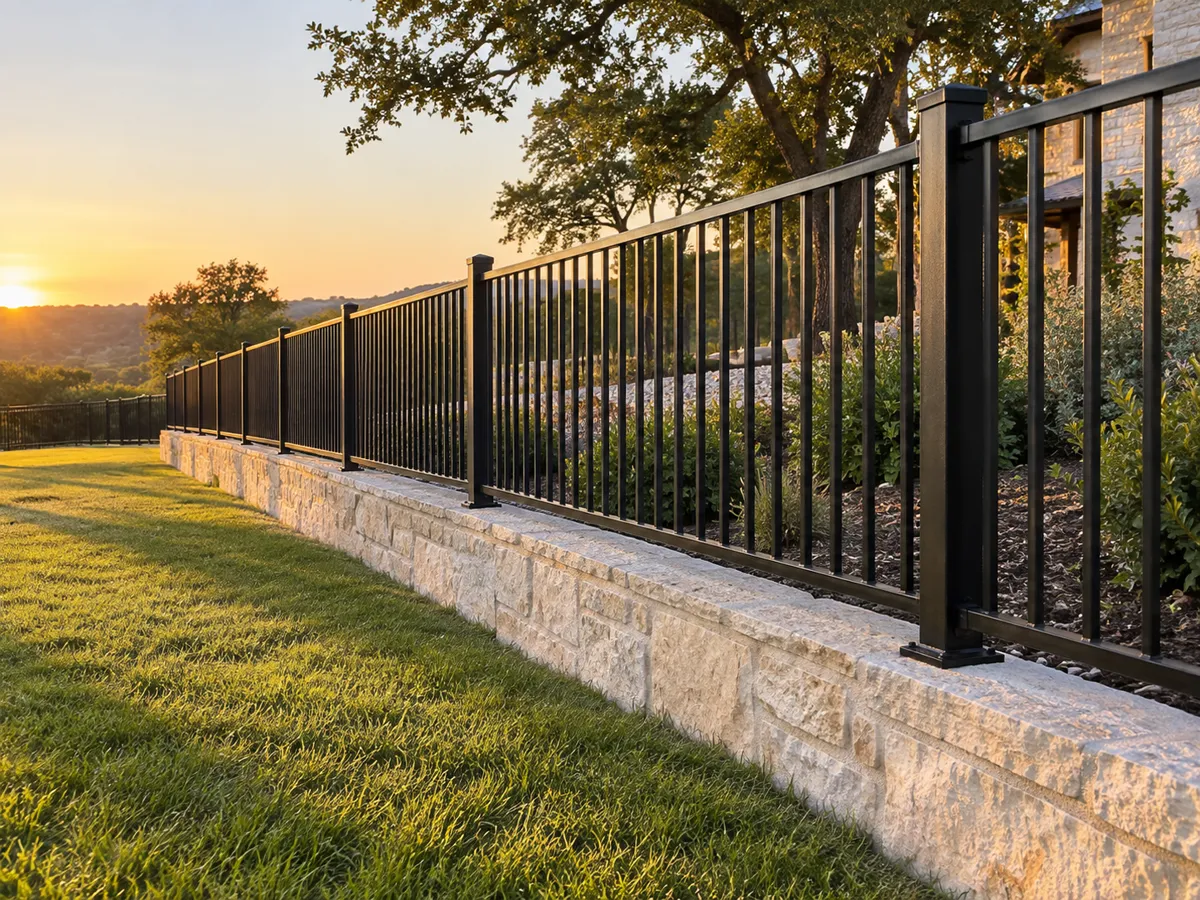
Long run of black flat-top ornamental iron fencing on a limestone curb beside a lawn at sunset

Colors and Finishes

Questions

Stucco Painting & Elastomeric Coating: Common Questions

Should I use elastomeric paint on my stucco?

Only if the walls have a lot of hairline cracking and no moisture problem. Elastomeric bridges fine cracks but breathes less than acrylic, so on a wall that takes on water it can blister. For sound stucco, a quality exterior acrylic is usually the better and less costly choice.

Can you paint stucco that has never been painted?

Yes, once the wall tests at a safe alkalinity. Color-coat stucco is cleaned, patched and primed with an alkali-resistant masonry primer before the finish goes on, and we will be straight with you if leaving it unpainted is the smarter option.

Can you paint over the white stains on my stucco?

Not directly. The white crust is efflorescence, salts carried out by moisture, and it has to be brushed off, washed and sealed with an efflorescence-blocking primer first. If a sprinkler or leak is feeding it, that source needs fixing or the stain returns.

Will my stucco cracks come back after painting?

Hairline cracks filled with flexible patching compound and covered with the right coating usually stay hidden. A crack that keeps widening is movement in the structure, and no coating will stop it, so we point those out before the work begins.

How much does it cost to paint a stucco house in Rancho Cucamonga?

Most stucco houses are estimated at roughly $6,000 to $20,000, or about $2.50 to $6 per square foot, depending on wall area, repairs and the coating chosen. Your written quote sets the final price after the walls are inspected.

Does elastomeric coating cost more than regular paint?

Usually, yes. It covers far fewer square feet per gallon because it goes on many times thicker, and it is sprayed and back-rolled, so both material and labor rise. That is why it should be used where cracking justifies it, not by default.

Can you match my existing stucco texture on patches?

Yes. Patches are worked to the same smooth, sand, hand-textured or sprayed finish as the surrounding wall, primed, and painted corner to corner so the repair does not show.


Free on-site estimate

Talk to us about stucco painting & elastomeric coating

Homeowners get a free on-site estimate. Boards, managers and contractors can send a scope for a bid.

Call (909) 922-1329

Licensed, insured and bonded · License #585047. Calls only, we do not receive text messages.

Call (909) 922-1329Licensed, insured and bonded · License #585047