Skip to content
Call (909) 922-1329Licensed, insured and bonded · License #585047

Wood Fence Staining and Painting in Rancho Cucamonga

Rancho Cucamonga Elite Painting is a trusted San Bernardino County contractor for fence staining in Rancho Cucamonga, CA, specializing in semi-transparent stain on cedar and redwood boards, solid-color stain on weathered pickets and brightening of gray fence wood. We offer wood fence painting and gate refinishing.

  • Free on-site estimate
  • Written scope, coat by coat
  • Colors you approve first

Get a free painting estimate

Or call (909) 922-1329. Calls only, we do not receive text messages.

About our wood fence painting & staining

Our team provides a cleaning and brightening pass before any finish, delivering boards that take color evenly for both residential and commercial projects. We sample the finish on a few boards of your fence first, and the written scope names the product, the coats and how the block wall and planting beds beside the fence are covered, so the choice between stain and painting is made on your wood.

From scrubbing mildew off the shaded side to back-brushing stain into rough-sawn boards around the gate hinges, our team handles every detail. Serving Rancho Cucamonga with Upland, Fontana and Rialto, we finish wood fences that stand in the same hard sun and dry wind as the houses behind them.

Why Rancho Cucamonga Elite Painting

How We Work

No salesperson hands you to a stranger. The person who measures the job answers for it.

Written scopePrep, primer and finish coats listed surface by surface
Colors firstSamples on your wall, and association submittals prepared for review
One crewThe crew that quotes the job is the crew that paints it
CA License #585047Licensed, insured and bonded

What sun and dry air do to fence wood

A wood fence in Rancho Cucamonga turns gray because sunlight breaks down the wood surface, and the dry inland air speeds up how rough and cracked it gets. The city sees sun on most days of the year, and the Santa Ana winds that come through the passes from the desert bring the lowest humidity of the year to Southern California.

The damage starts at the surface. About a fifth to a third of wood is lignin, the natural glue that holds the cellulose fibers together, and ultraviolet light starts breaking it down within hours of exposure. The change is invisible at first, but it weakens how well any finish can grip. As the lignin washes out, loose gray fibers are left behind, and in arid climates the wood often takes on a silvery-gray sheen.

Signs your fence needs attention

  • Boards that have turned gray or silver.
  • Fibers that rub off on your hand.
  • Checks along the boards and cracks at the ends.
  • Dark blotches of mildew on the shaded side.
  • A previous stain or paint that is flaking or has worn through.

Badly weathered wood with loose fibers on the surface cannot hold paint or stain, which is why cleaning comes before color.

Cleaning and brightening gray fence boards

Before any stain or paint goes on a gray fence, the loose, weathered surface has to come off and the wood has to be brought back to a clean, even color. Staining over gray fibers locks the gray in and gives the new finish nothing solid to hold.

What the cleaning covers

  • Mildew removal on the shaded and irrigated sides of the fence.
  • Loose fibers and old flaking finish removed down to sound wood.
  • A wood brightener where the boards are dark or stained.
  • A thorough rinse, then time for the wood to dry before finishing.

Many commercial wood brighteners contain oxalic acid, which also removes the blue-black stains that iron nails leave on wood. Every trace of the brightener is rinsed off before the finish goes on.

On new pressure-treated boards, we wait until the wood has dried out from the treatment, because finishing wet treated lumber can let the preservative bleed through.

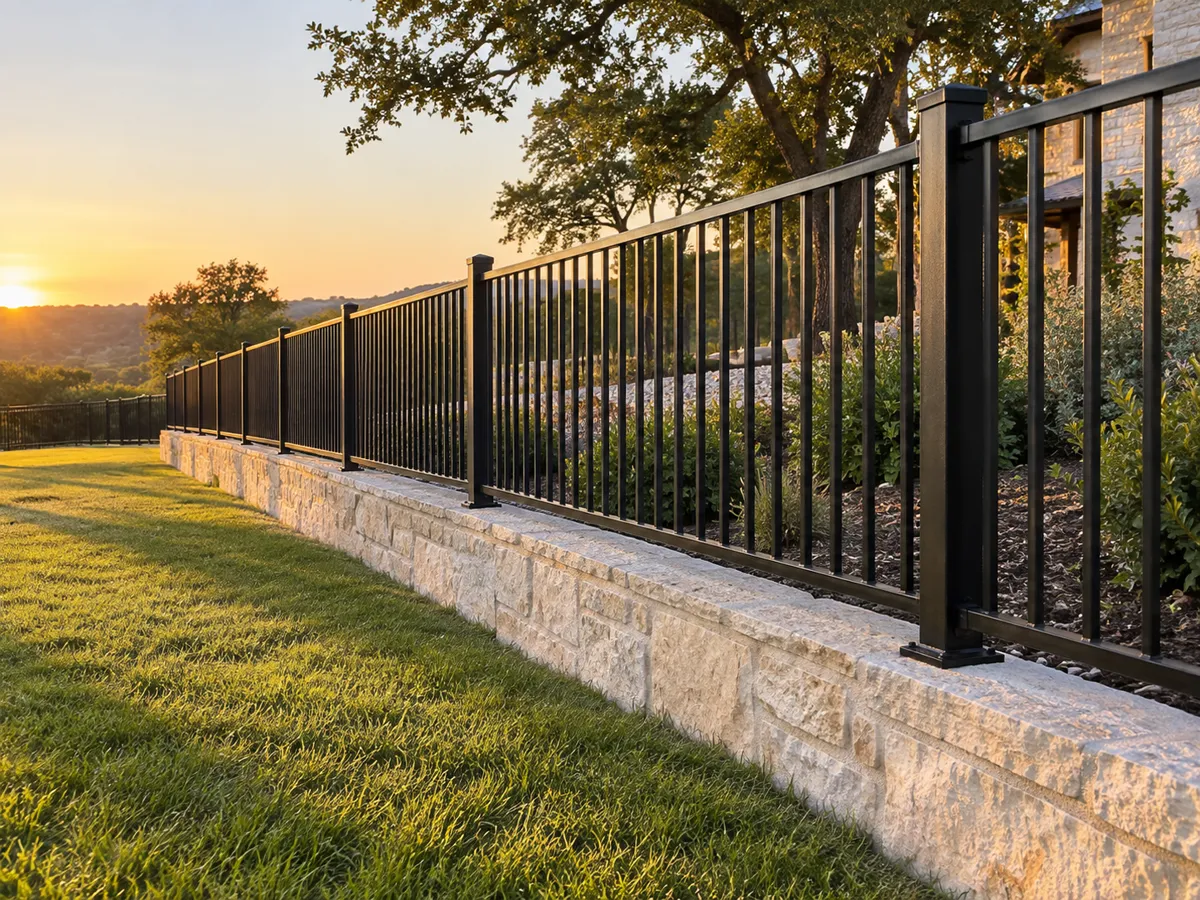
Long run of black flat-top ornamental iron fencing on a limestone curb beside a lawn at sunset

Stain or paint: choosing a fence finish

For most wood fences in Rancho Cucamonga, a semi-transparent stain is the easiest finish to live with, and a solid-color stain or paint is the better choice when the boards are mismatched or you want a color rather than a wood tone. The more natural a finish looks, the more often it needs renewing, and the more film it builds, the more it can peel.

Semi-transparent stain

A penetrating, oil-based semi-transparent stain soaks into the surface and lets the grain show. It lets the wood breathe and wears away slowly rather than cracking and peeling, so renewing it is mostly cleaning and restaining, not scraping.

Solid-color stain

A solid-color stain hides the grain and covers boards that no longer match. It forms a film and behaves much like paint.

Paint

Paint carries more solids than a solid-color stain, so it builds a thicker film and gives the best color hold. It needs sound, primed wood, and once it starts to peel, it has to be scraped before it is recoated.

Latex semi-transparent stain

A water-based semi-transparent stain looks like the oil type but forms a thin film, and those films tend to crack and flake rather than wear away evenly. We sample your top choices on your own boards so you can see the color on the actual wood before deciding.

Protecting the block wall, plants and your neighbor

A wood fence in a Rancho Cucamonga yard usually sits beside a concrete block wall, a planting bed or both, and those are covered before any stain is opened. Stain on a block wall or on your plants is harder to fix than the fence itself.

How the work area is protected

  • Block walls and stucco next to the fence are masked with plastic and tape.
  • Plants are covered and the beds tarped at the base of the fence.
  • Stain is brushed rather than sprayed near anything that must not be colored, and brushing also controls how much stain each board takes.
  • Gates, hinges and latches are masked or removed.

If the fence is on the property line, the other side belongs to your neighbor too. California's Good Neighbor Fence Act presumes adjoining owners share equally in the reasonable cost of maintaining a boundary fence, and it asks for written notice, including the estimated cost, before the work. We can price the neighbor's side as a separate line on the written estimate so you have something to show them.

Every stain and paint we use meets South Coast AQMD Rule 1113, which caps the volatile organic content of coatings sold and applied in the district.

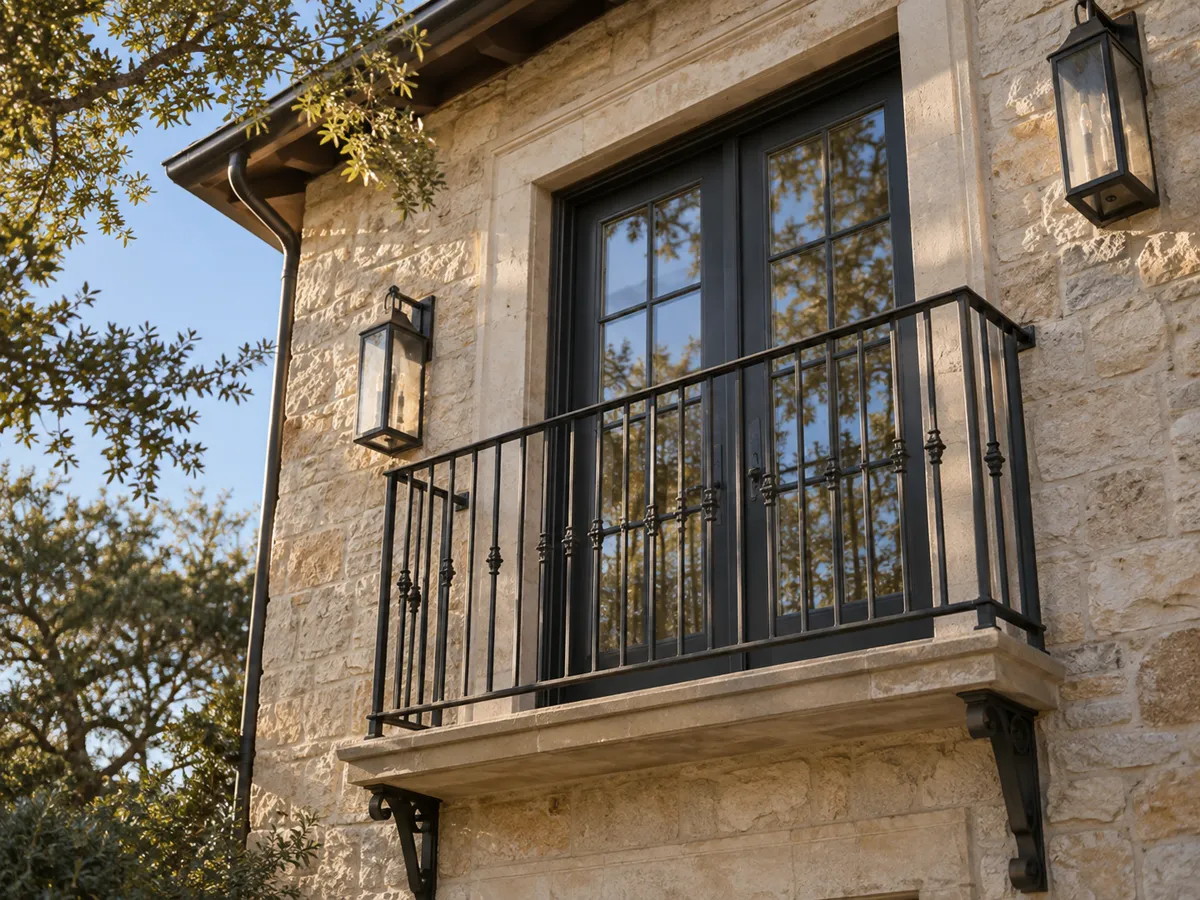
Juliet balcony with a black iron railing on stone brackets in front of French doors on a limestone facade

How long before a fence needs staining again

How soon a fence needs staining again depends on its sun exposure and its finish, not on a number of years. A south- or west-facing run in full sun wears much faster than a shaded side yard, and a semi-transparent stain needs renewing more often than paint, though it is much easier to renew.

The signs to watch for are the ones in the first section: graying boards, fibers that rub off, and worn or flaking finish. Catching it early means a clean and restain rather than stripping a fence back to bare wood.

Community managers with long runs of wood fencing along a common area can ask for a written maintenance scope that lists each run by exposure, so the sunniest sections are budgeted first.

What fence staining costs in Rancho Cucamonga

Fence staining or painting in Rancho Cucamonga is typically estimated at roughly $700 to $3,000, depending mostly on the length and height of the fence and how weathered the boards are. A short run of sound boards stained on one side sits at the low end; a long, gray fence cleaned, brightened and finished on both sides sits near the top.

What moves the price

  • Linear footage and height of the fence.
  • One side or both sides.
  • How much cleaning, brightening and old-finish removal the boards need.
  • Semi-transparent stain, solid-color stain or paint.
  • Gates, lattice tops and decorative trim.
  • Access: plants, block walls and narrow side yards to protect and work around.

These ranges are estimates and can change once the fence has been measured, and your written quote sets the final price.

Colors and Finishes

The process

How a Painting Job Runs

Four steps, and nothing is painted until you have approved the scope and the colors.

  1. The walk

    We walk the house or property with you, look at the stucco, the trim and the old coating, and note what the sun and the wind have done to each side.

  2. The written scope

    You get the prep, the products, the colors and the dates in writing. For an association or a building, the scope is phased so residents and tenants know which day is theirs.

  3. Prep, then paint

    Washing, scraping, patching and caulking come first, because that is what the paint holds on to. Then primer where it is needed and the finish coats.

  4. The final walk

    We walk it again with you before we call it done, and touch up anything you point at.

Questions

Wood Fence Painting & Staining: Common Questions

Should my wood fence be stained or painted?

A semi-transparent stain suits most fences with sound boards and a wood tone you like, because it wears away instead of peeling. Paint or solid-color stain is better for mismatched or patched boards, or when you want a color.

My fence was painted before. Can it be stained now?

A see-through stain cannot soak into wood that is still covered by an old paint film, so a painted fence usually stays with paint or a solid-color stain. We look at how much of the old finish is left and explain the options at the walk.

Do you stain both sides of the fence?

Yes, if you want both sides done and the neighbor agrees. The neighbor's side is priced as its own line on the written estimate.

Will the stain harm my plants?

Plants and beds are covered and tarped before the stain is opened, and stain is brushed near planting rather than sprayed.

How soon can a new fence be stained?

New pressure-treated boards need to dry out from the treatment first, or the preservative can bleed through the finish. We check the wood at the walk and set the date on the estimate.

Is brushing better than spraying for fence stain?

For a semi-transparent stain, brushing works it into the wood and limits it to what the boards can absorb. We brush wherever a block wall, plants or a neighbor's property are close.

Can you stain the fences around our community's common areas?

Yes. Association boards and community managers can send a map or list of the fence runs, and we price them by run on one written estimate.

Is the estimate free?

Yes. We measure the fence, check how weathered the boards are, and give you a written estimate with the finish, the coats and the start date.

Free on-site estimate

Talk to us about wood fence painting & staining

Homeowners get a free on-site estimate. Boards, managers and contractors can send a scope for a bid.

Call (909) 922-1329

Licensed, insured and bonded · License #585047. Calls only, we do not receive text messages.

Call (909) 922-1329Licensed, insured and bonded · License #585047