Private offices and conference rooms
Flat or matte finishes on walls with a lot of side light, because flat paint hides minor imperfections in the drywall better than anything shinier.

Rancho Cucamonga Elite Painting is a trusted San Bernardino County subcontractor for tenant improvement painting in Rancho Cucamonga, CA, specializing in new drywall finish coats, office suite repaints, and medical suite painting for general contractors. We offer low-odor interior systems and after-hours painting on occupied floors.
Get a free painting estimate
Or call (909) 922-1329. Calls only, we do not receive text messages.
Our team provides a painting line that slots into the GC's schedule after drywall and ahead of flooring, delivering a closeout-ready suite on both residential and commercial projects. We submit product data for every coating, with the VOC content the state green code table on the plans calls for, and the crew that paints the suite walks the punch list with your superintendent before turnover.
From priming fresh Level 4 or Level 5 drywall to touch-up after the ceiling, flooring and millwork trades leave, our team handles every detail. Serving Rancho Cucamonga, Ontario, Upland and Claremont, we keep to the GC's schedule and to each building's rules on work hours.
Why Rancho Cucamonga Elite Painting
No salesperson hands you to a stranger. The person who measures the job answers for it.
A tenant improvement painting package covers every painted surface inside the suite being built out, from new partition walls to the frames and ceilings, and it is priced as one subcontract under the general contractor. It does not cover the building shell, the parking lot or other tenants' spaces unless the GC adds them.
Landlords often fund these build-outs as a lease inducement, paying toward improvements or doing the renovation themselves to win or keep a tenant. Paint is one of the last trades between framing and move-in, so it absorbs whatever delay the earlier trades leave behind.
Paint in a tenant improvement starts once the drywall is taped, finished and sanded, and it finishes twice: once before the flooring goes in, and again as touch-up after every other trade has left. A painting sub who plans for only the first pass is the reason punch lists run long.
New drywall is finished to a numbered level, from Level 0 with no finishing at all to Level 5, the smoothest. The level is set in the specifications, not by the painter, and it matters to us because a Level 4 wall under a glossy paint or strong side lighting can show joints that a Level 5 wall hides. If the finish schedule pairs a sheen with a wall level that will show seams, we raise it as a question before the first coat, not after.
Dates for each pass are written into the bid against the GC's own schedule, so our crew arrives when the walls are ready rather than on a guess.
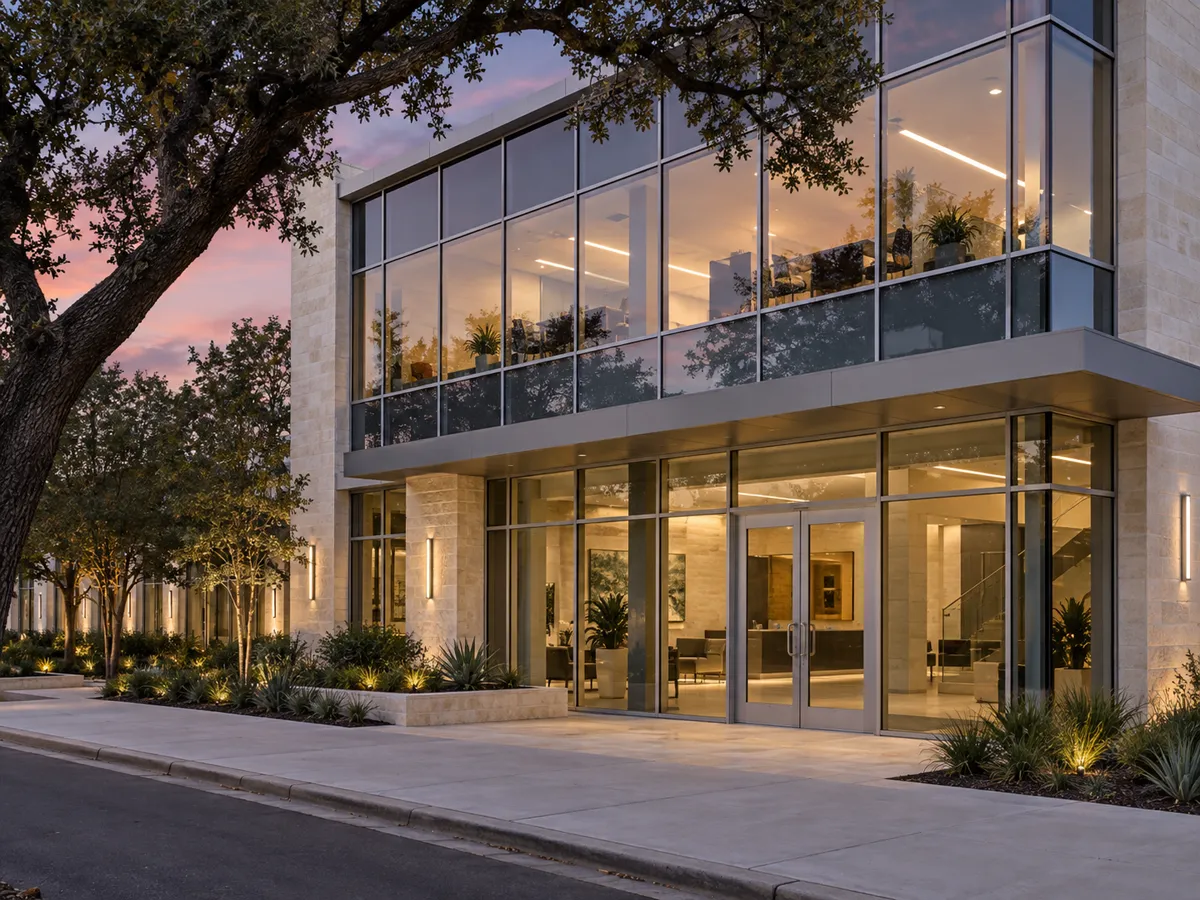
When a suite is built out inside a building with other tenants still working, paint odor becomes the neighbor's complaint, so product choice and working hours are planned before the first gallon is opened. Indoor VOC levels can run up to ten times higher than outdoor air, and fresh paint is one of the main sources in a newly finished space.
Three things keep odor down on a live floor:
Heavy industrial coatings do not belong here at all. South Coast air district Rule 1113 prohibits industrial maintenance coatings in office space and meeting rooms that are not exposed to the extreme conditions those coatings are made for, so an office wall gets an architectural product even if a heavier one is on the truck for another job.
Office and medical suites are painted to the finish schedule in the drawings, and the difference between them is mostly how hard the walls will be cleaned. A conference room and an exam room can share a color and still need different sheens.
Flat or matte finishes on walls with a lot of side light, because flat paint hides minor imperfections in the drywall better than anything shinier.
Eggshell or satin where carts, chairs and coffee meet the wall, since both sheens wash far better than flat.
The sheen and product the designer or the clinic specifies, usually a washable finish that tolerates frequent wiping. We paint what is specified and send product data for approval first.
Hollow metal frames and wood doors take an enamel in a higher sheen, and deep accent colors are scheduled early so their extra coats do not hold up the rest of the suite.
A TI painting package is not done when the walls are painted; it is done when the GC has what the owner needs to maintain those walls. Closeout is written into our bid as its own line.
Office and tenant improvement painting is typically estimated at roughly $15,000 to $100,000 per contract, a budgetary range from painting trade data rather than a number for your suite. The bid itself is built from your drawings.
Send the plans, the finish schedule and the construction schedule for a bid. Those figures are estimates, they are subject to change as drawings are revised, and the written bid based on the set sets the final price.
The process
Four steps, and nothing is painted until you have approved the scope and the colors.
We walk the house or property with you, look at the stucco, the trim and the old coating, and note what the sun and the wind have done to each side.
You get the prep, the products, the colors and the dates in writing. For an association or a building, the scope is phased so residents and tenants know which day is theirs.
Washing, scraping, patching and caulking come first, because that is what the paint holds on to. Then primer where it is needed and the finish coats.
We walk it again with you before we call it done, and touch up anything you point at.
Also from our crews
Questions
Yes. The takeoff is built room by room from the drawings and finish schedule, and a site visit is added when the suite is a second-generation space with existing walls to repair.
Yes, when the building's rules allow it. Evening and weekend painting is planned in the bid for shared corridors and walls beside occupied suites, and the hours are set with the GC and property manager.
Yes. Product data sheets showing each coating's VOC content are submitted for approval before work, and a copy goes in the closeout package with the product list.
Yes, in the quantity the specifications call for, labeled with color, product and the rooms it was used in.
We do, as a scheduled pass in the bid. The superintendent calls it once those trades are out, and the crew that painted the suite does the touch-up.
That is the architect's decision. What we add is a flag during submittals when a glossy sheen or strong side lighting is paired with a finish level likely to show seams.
Yes, to the finish schedule the designer or clinic sets. Exam and procedure rooms usually call for a washable sheen, and the product data goes in for approval before work starts.
That is the point of a TI subcontract. Each painting pass is dated against the GC's schedule in the bid, and changes to that schedule are handled through the superintendent.
Yes. A second-generation space gets its old partition scars patched and primed, then the whole suite is painted to the new finish schedule like a new one.
Homeowners get a free on-site estimate. Boards, managers and contractors can send a scope for a bid.
Licensed, insured and bonded · License #585047. Calls only, we do not receive text messages.