Rafter tails and eave brackets
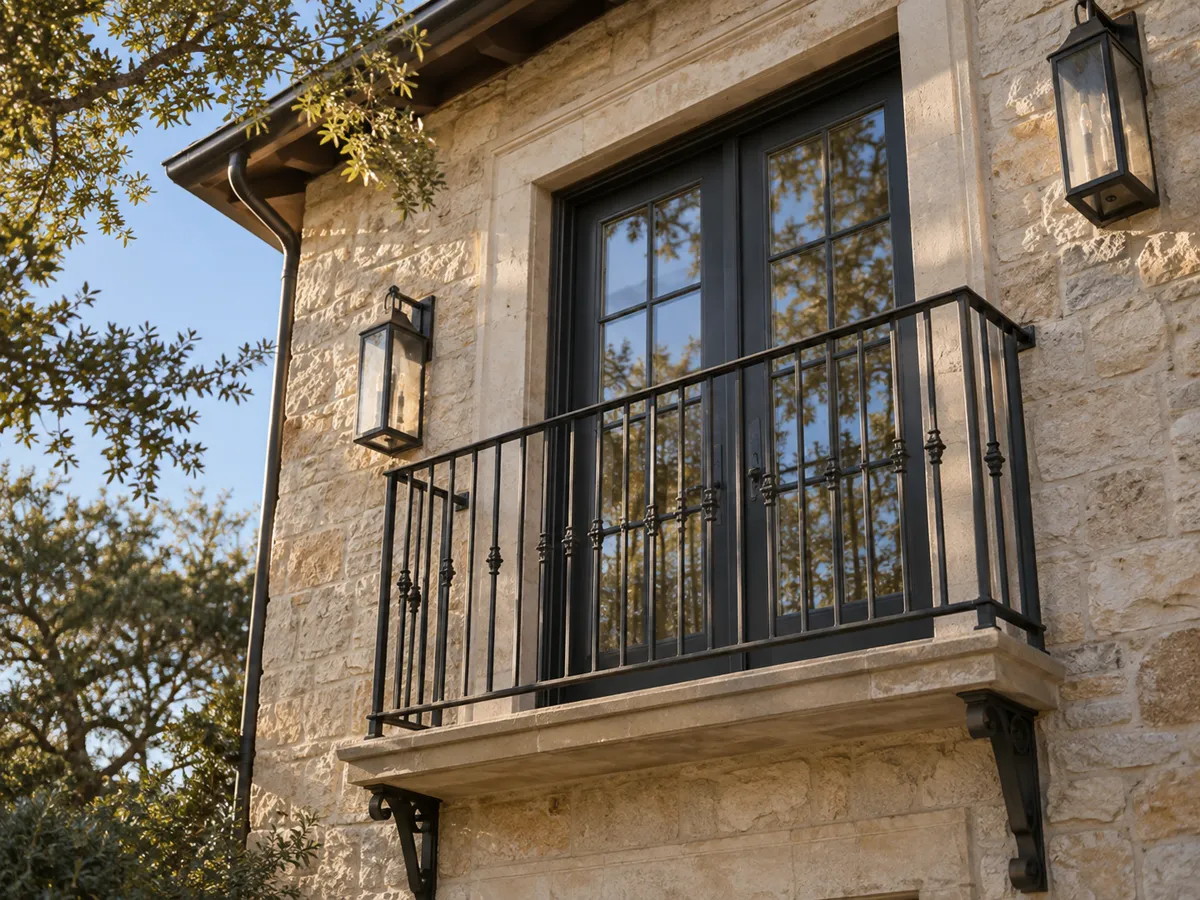
Exposed rafter ends and decorative brackets under deep eaves are end grain pointing at the weather, and they are usually the first wood to soften.

Rancho Cucamonga Elite Painting is a trusted San Bernardino County specialist in historic home painting in Rancho Cucamonga, CA, specializing in lead-safe paint preparation, wood siding and trim repair, and multi-color Craftsman schemes. We offer porch column and bracket restoration and double-hung window sash painting.
Get a free painting estimate
Or call (909) 922-1329. Calls only, we do not receive text messages.
Our team provides wet hand scraping inside plastic containment, delivering period-correct painting on bungalows and older buildings for both residential and commercial projects. The crew that walks your older house is the crew that paints it, and we write the containment, every wood repair, the primer and each coat into the scope before work begins.
From wet-feathering the scraped edges on lap siding to the final coat on the porch ceiling, our team handles every detail. Serving Rancho Cucamonga, Upland and Claremont, we plan the work on an older house around the people who live in it.
Why Rancho Cucamonga Elite Painting
No salesperson hands you to a stranger. The person who measures the job answers for it.
If your house was built before 1978, its older coats of paint should be treated as if they contain lead until a test says otherwise. The federal ban on lead paint in homes took effect in 1978, so anything painted earlier may have it buried under newer layers, and scraping or sanding turns those layers into dust.
The EPA's Renovation, Repair and Painting rule applies to anyone paid to disturb painted surfaces in homes, child care facilities and preschools built before 1978. What that means on your house is a set of lead-safe work practices, and our written scope lists each one so you can check it happening:
Children are the reason this matters. Lead dust damages a developing nervous system, and paint chips taste sweet, so small children put them in their mouths. Pregnant women should also stay clear of the work area.
Much of Rancho Cucamonga is newer tract housing, so the pre-1978 question tends to come up in the older pockets nearby: Upland's historic districts, Claremont's older streets near the colleges and the Village, and the older structures along Etiwanda Avenue.
Paint on rotten wood is a cover-up, not a repair, so soft wood is fixed before any primer goes on. Wood decay fungi need wood that stays wet, with moisture content above roughly 20 percent, and on a Craftsman house the water collects in predictable places. We probe the soft spots, take moisture readings, find where the water gets in, and cut out and replace what has gone.
Exposed rafter ends and decorative brackets under deep eaves are end grain pointing at the weather, and they are usually the first wood to soften.
Tapered square porch columns and the rails between them trap water at their bases, where brown rot leaves wood shrunken, dark and cracked into rough cubes.
Shingles and siding boards split, cup and lose paint along their bottom edges; loose boards are refastened and failed ones are replaced to match the profile.
Craftsman windows are typically 4-over-1 or 6-over-1 double-hung units, and their sills and lower rails take the most sun and water on the house. Redwood and cedar, common on older California houses, bleed tannin through light paint, so bare repairs in those woods get a stain-blocking primer before the finish coats.
A Craftsman house usually looks right in three or more colors: a body color, a trim color for the eaves, bargeboards and window casings, and an accent for the sash or the front door. The style came out of the Arts and Crafts movement and was built across Southern California from about 1905, and its palette leaned on natural materials, stone, shingle and wood.
Local review is worth a call before you settle a scheme. Upland has nine locally designated historic districts, and its preservation program requires a Certificate of Appropriateness for exterior modifications that alter the appearance of a designated resource, so ask the planning counter whether your color change counts. Upland also offers Mills Act contracts, which give property tax relief to owners who maintain a historic building. In Claremont's historic district, the review rule for exterior changes to houses excludes painting, and Claremont Heritage keeps a research library for owners choosing colors.
The process
We walk the house with you, test the old paint before any sanding, and map every soft board, loose shingle and failed sill.
Plastic goes down under each wall being worked, windows and vents near the work are sealed, and plantings along the foundation are covered.
Loose paint is wet scraped back to a sound edge, and the wood repairs are made before anything is primed.
Bare wood and repairs get primer, including a stain blocker on redwood and cedar.
Body, trim and accent colors go on in the number of coats named in your scope, brushed where the detail needs it.
HEPA vacuuming and wet cleaning close each work area, and we finish with a walkthrough and punch list.
Repainting a historic or Craftsman home is typically estimated at roughly $15,000 to $60,000, and the amount of failing paint and rotten wood moves that range more than the size of the house.
These numbers are estimates, subject to change once we have tested and probed your house; the written quote that follows the free walk sets the final price, based mostly on paint condition, repair count and the number of colors.
The same federal rule covers child care facilities and preschools built before 1978, and older storefronts, churches and meeting halls carry the same layers of old paint as a house. Owners and managers of those buildings can send photos and the building address for a walk and a written proposal, and larger commercial repaints go through our commercial painting team.
Questions
If it was built before 1978 and the job will disturb old paint, yes. Paid work on that paint falls under the EPA rule, and we treat the old layers as lead-bearing until testing shows otherwise.
Only where it is still firmly bonded. Loose and flaking paint has to be wet scraped back to a sound edge first, or the new coats peel off with it, and that scraping is exactly the step that needs containment.
Usually not. Stabilizing the paint that has failed and keeping the sound layers underneath is the normal approach, because full stripping creates far more dust and removes paint that was still doing its job.
It depends on the city and on whether your house is designated. Upland reviews exterior modifications to designated resources through a Certificate of Appropriateness, so check with its planning counter first; Claremont's historic district review for houses excludes painting.
Much of it can be saved. We cut out only the decayed section and fit new wood to the original profile, and whole pieces are replaced only when the rot runs through them.
For exterior work, rarely, because each wall is contained and cleaned as we go. Families with small children or a pregnant household member should keep them away from the work area, and interior work on old paint is scheduled room by room with the room sealed.
Sometimes the old color can be found under later layers in a protected spot such as behind a shutter or under a trim board. We show you what we find, and you choose whether to follow it or pick a period palette.
Call us or send the form. We test, probe and photograph the house on a free walk, then send a written estimate listing the containment, repairs and colors.
Homeowners get a free on-site estimate. Boards, managers and contractors can send a scope for a bid.
Licensed, insured and bonded · License #585047. Calls only, we do not receive text messages.