Skip to content
Call (909) 922-1329Licensed, insured and bonded · License #585047

Limewash and Venetian Plaster Finishes in Rancho Cucamonga

Rancho Cucamonga Elite Painting is San Bernardino County's leading choice for limewash and Venetian plaster in Rancho Cucamonga, CA, specializing in tinted limewash on brick and stucco, trowelled marmorino walls, and burnished polished plaster. We offer mineral primer over previously painted surfaces and protective wax finishes.

  • Free on-site estimate
  • Written scope, coat by coat
  • Colors you approve first

Get a free painting estimate

Or call (909) 922-1329. Calls only, we do not receive text messages.

About our limewash & Venetian plaster finishes

Our team provides mineral painting on masonry and decorative wall painting with slaked lime and marble dust, delivering soft, mottled color on feature walls for both residential and commercial projects. We sample every finish on a board for your sign-off, and the crew that makes your approved sample is the crew that finishes the wall.

From dampening a sun-heated stucco wall before the first pass to the final wax on a polished plaster fireplace surround, our team handles every detail. Serving Rancho Cucamonga, Claremont, Chino Hills and Corona, we bring the signed board into every room it governs.

Why Rancho Cucamonga Elite Painting

How We Work

No salesperson hands you to a stranger. The person who measures the job answers for it.

Written scopePrep, primer and finish coats listed surface by surface
Colors firstSamples on your wall, and association submittals prepared for review
One crewThe crew that quotes the job is the crew that paints it
CA License #585047Licensed, insured and bonded

How limewash and lime plaster work

Limewash and Venetian plaster in Rancho Cucamonga both start from slaked lime, calcium hydroxide, which hardens by reacting with carbon dioxide in the air and turning back into calcium carbonate, essentially limestone. That is the whole difference from paint. Paint dries into a plastic film that sits on a wall; lime soaks into a porous surface and becomes part of it.

Limewash

Limewash is slaked lime suspended in water, tinted with earth pigments, and brushed on thin. It is absorbed easily by masonry, and the chemical reaction hardens it there, which is why it has been used on brick and stone for centuries. It dries flat and cloudy, lighter than it looks wet, with movement in the color rather than one flat tone.

Venetian plaster

Venetian plaster is slaked lime loaded with marble dust, and a lime-based mix can carry more than 40 percent marble powder. It goes on in several thin layers with a steel trowel or spatula over a primer and basecoat, then the top layer is burnished with the steel until it reads like polished marble, travertine or limestone, and a protective wax seals it. Marmorino, scagliola and sgraffito are all techniques in this family.

Why neither behaves like paint

Lime stays permeable, letting moisture diffuse through and evaporate, and it sets into a mass that is durable yet flexible, less brittle than cement. It is also caustic while wet, so glass, tile and natural stone near the work are covered and any splash is rinsed straight away.

Which surfaces take a mineral finish

Raw, absorbent brick and stone take limewash directly; almost everything else needs a mineral primer first. The quickest check is to wet the surface: if brick or stone drinks the water in, it will drink the limewash too, and if the water beads, it needs a primer to give the lime something to bond with.

  • Direct application: unpainted, unsealed brick, stone and other raw mineral surfaces.
  • Mineral primer first: painted or unpainted stucco, concrete brick and block, glazed or reclaimed brick, drywall, cured lime or cement plaster, and old painted walls that are sound and not chalky.
  • Wait or test first: new cement stucco and fresh plaster are strongly alkaline, so they need time to cure or an alkalinity test before lime goes on.
  • Not suitable: steps, floors, porches, decks and anywhere with foot traffic, and anywhere water pools or sits.

That list matters here, because stucco is on nearly every house in Rancho Cucamonga and concrete block walls line the lots. A painted stucco house can be limewashed, but only over a mineral primer, and a primer is opaque, so the distressed brick-showing-through look is not possible on stucco. We tell you which look your wall can actually give before any sample is made.

Two local habits need planning. Sprinkler overspray and splash from wet soil can leave iron staining on a lime finish over time, so we look at where the heads throw water. And limewash is not a stain blocker, so old rust or mineral marks in masonry may show through unless they are sealed first.

Built-in bookcases in charcoal paint flanking a window, with a cushioned window seat between them

Samples before the wall

Every mineral finish is approved on a sample board before we touch your wall, because lime changes as it dries and no fan deck can show you what it will do. The board is made with the same primer, the same batch and the same hand as the real wall, and you keep it until the job is finished.

Choose the base and the color

Limewash tints to light and medium colors with natural earth oxide pigments, so we start from the palette the product can actually reach rather than a chip it cannot match.

Make two or three boards

Each board varies one thing: color, how heavily it is distressed, or for plaster, how far it is burnished.

Judge it dry, in your room

Lime dries much lighter and more opaque than it looks wet, so boards are judged dry, against your floor, trim and daylight.

Sign the board

The approved board is dated and signed, and it travels with the crew. A new batch of tinted product is checked against it before it goes on a wall.

Living with it and caring for it

A lime finish ages by wearing slowly and gaining patina, not by peeling, and that is the main reason people choose it. The data sheet for one Italian slaked lime paint says it will not chip, peel or flake, and that weathering is meant to give it an antique, distressed look over time. Paint fails by losing its bond and lifting in sheets; limewash wears back gradually, and a fresh coat goes on over it without stripping.

  • Touch-ups blend, because the finish was never uniform to begin with.
  • Layers of old limewash eventually build up scale that flakes off, which is when a wall is brushed down and recoated rather than stripped.
  • Lime is alkaline and mildly antibacterial, and the tested product resists mold.
  • A breathable water-repellent topcoat is worth it on sills, ledges and the lowest part of an exterior wall.
  • Venetian plaster is cleaned gently and its wax is renewed now and then; it is never scrubbed with harsh cleaners.

Rancho Cucamonga's weather shapes when exterior lime goes on. The city has a hot-summer Mediterranean climate with a lot of sunny days, and lime applied to a hot wall or in direct sun flash-dries on the surface instead of bonding below it, so we dampen the wall, chase the shade and work the cooler part of the day. Santa Ana wind days, which bring the lowest humidity of the year, are days we reschedule exterior limewash.

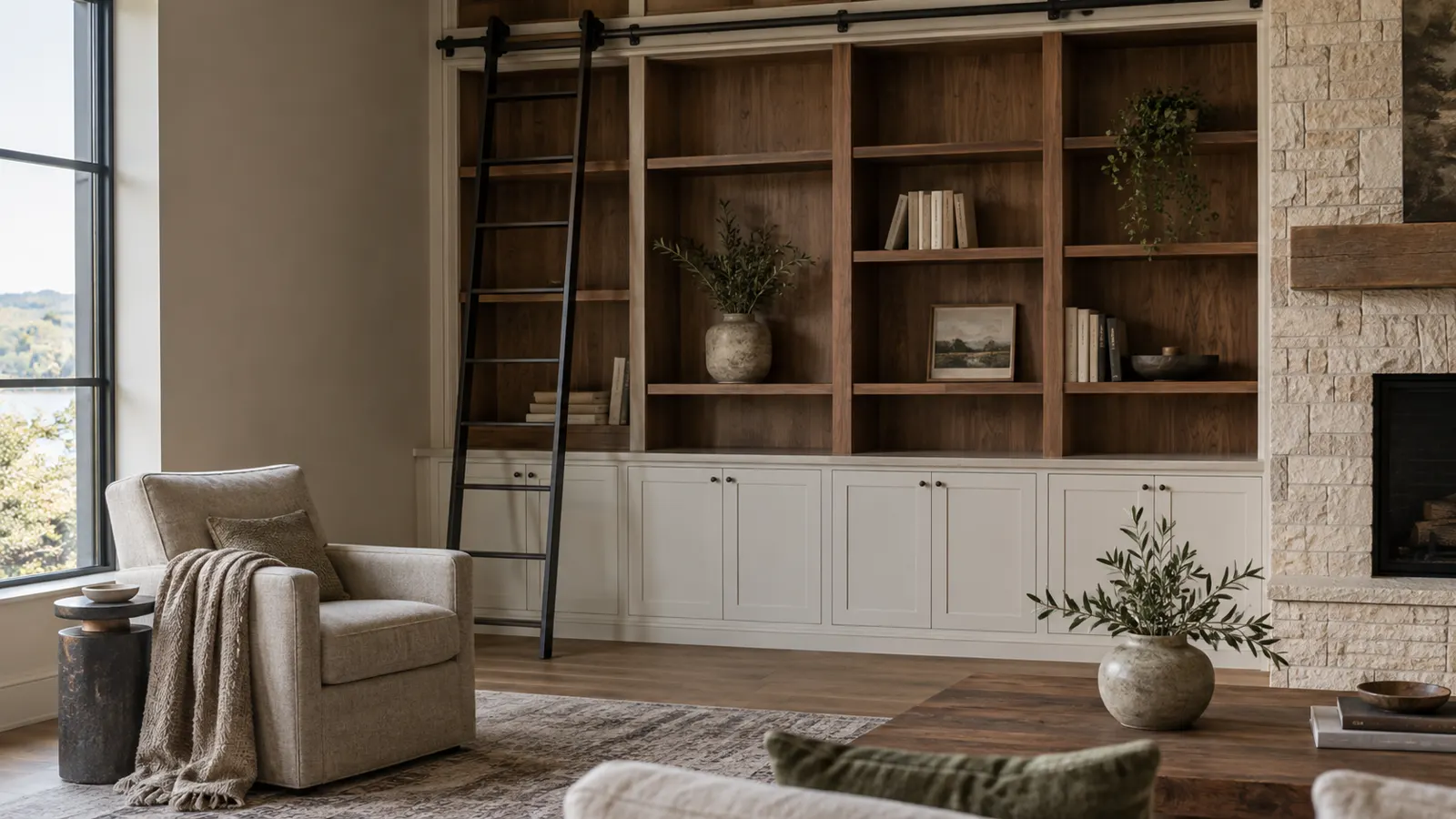
Living room wall of built-in cabinets, white shaker doors below and walnut open shelving above, with a black library ladder and a limestone fireplace

What decorative finishes cost

Limewash is typically estimated at roughly $4 to $12 per square foot, and Venetian plaster and Roman clay at roughly $8 to $25 per square foot, with prep and the number of layers moving the price most.

  • Whether a mineral primer is needed, which it is on stucco, block, drywall and painted surfaces.
  • Repairs first: cracks, efflorescence and old peeling paint are dealt with before any lime.
  • Number of trowelled layers and how far the plaster is burnished and waxed.
  • Height, scaffolding and cutting in around beams, niches, arches and trim.
  • Color matching to a designer's sample or an existing finish.
  • Exterior elevations that need protection for landscaping, windows and stone.

All of these figures are estimates for Rancho Cucamonga and may change once the surface is tested; the written quote you receive after the consult and the approved sample board sets the final price, driven mostly by square footage, primer and layer count.

For designers, builders and commercial interiors

Interior designers, custom home builders and owners of restaurants, offices and hospitality spaces often want a lime wall in a lobby, a dining room or a feature stair. We can work from a designer's specification or reference sample and produce the boards for their approval. The limewash product data we work from lists very low VOC content, a very flat sheen and the top class for reaction to fire, which is the kind of product data an architect asks to see before approving a finish.

A white-painted brick house with tall divided-lite double-hung windows under mature oak trees

Colors and Finishes

The process

How a Painting Job Runs

Four steps, and nothing is painted until you have approved the scope and the colors.

  1. The walk

    We walk the house or property with you, look at the stucco, the trim and the old coating, and note what the sun and the wind have done to each side.

  2. The written scope

    You get the prep, the products, the colors and the dates in writing. For an association or a building, the scope is phased so residents and tenants know which day is theirs.

  3. Prep, then paint

    Washing, scraping, patching and caulking come first, because that is what the paint holds on to. Then primer where it is needed and the finish coats.

  4. The final walk

    We walk it again with you before we call it done, and touch up anything you point at.

Questions

Limewash & Venetian Plaster Finishes: Common Questions

What is the difference between limewash and paint?

Limewash is lime and water that hardens into the surface by taking carbon dioxide from the air, while paint forms a film on top of it. So limewash looks cloudy and flat and wears back slowly, and paint looks even and eventually peels.

Can you limewash my painted stucco house?

Yes, over a mineral primer applied first to give the lime a porous surface to bond to. The primer is opaque, so the finish will be a soft mottled color rather than the see-through distressed look you get on raw brick.

Can limewash go on interior drywall?

Yes, once the drywall, painted or new, has been coated with a mineral primer, which the manufacturer lists as required on gypsum board. The primer gives the lime a porous mineral surface to bond with, where bare paper and old paint would not.

Will limewash come off on my hands or clothes?

Limewash bonds into an absorbent or primed surface as it hardens, and the maker of the product we sample from rates it as not chipping, peeling or flaking. On spots people brush against often, such as a hallway corner or an entry wall, we can add a breathable protective coat.

Is Venetian plaster a good idea in a bathroom?

It can work on walls away from direct spray, because the wax seal makes the surface water resistant. It is not a shower finish, and anywhere water pools is the wrong place for any lime product.

Can you match my designer's sample?

Yes. Send the sample or its specification, and we make boards until one matches in your light, then your designer signs it off before we start.

Can you limewash brick that has already been painted?

Painted brick needs the old loose paint removed and a mineral primer, and then it takes limewash like any other primed surface. It will not show the brick color through, so if that is the look you want, the paint has to come off first.

How do I book a consult?

Call us or use the request form, tell us the room or elevation and the look you have in mind, and we will visit, test the surface and quote the sample boards and the job in writing.


Free on-site estimate

Talk to us about limewash & Venetian plaster finishes

Homeowners get a free on-site estimate. Boards, managers and contractors can send a scope for a bid.

Call (909) 922-1329

Licensed, insured and bonded · License #585047. Calls only, we do not receive text messages.

Call (909) 922-1329Licensed, insured and bonded · License #585047